
Why are most high-strength bolts black? Why are Grade 8.8, Grade 10.9, and Grade 12.9 bolts black?
2026 Oct 27
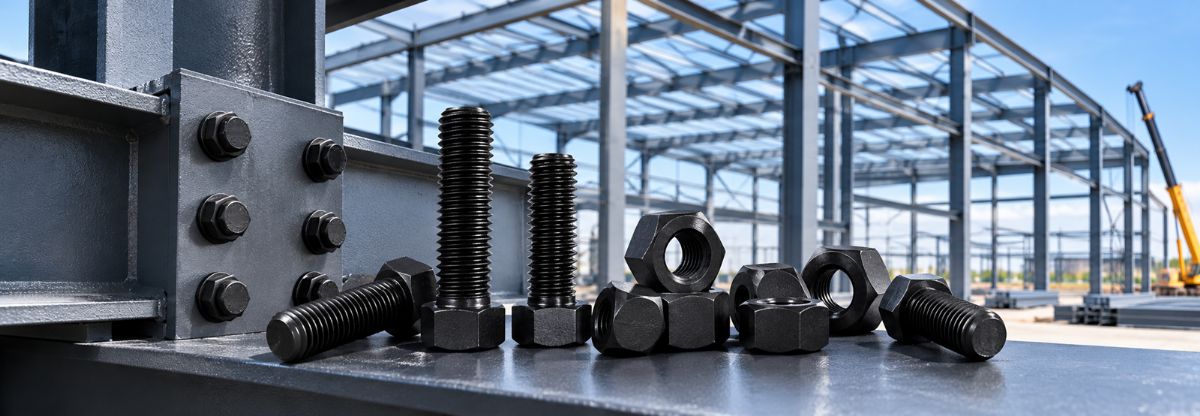
Bolts used in everyday furniture or ordinary equipment are typically bright silver, whereas large hex bolts used in heavy-duty industrial equipment and steel structures (such as Grade 10.9 and Grade 12.9) are almost exclusively black.
Why do high-strength bolts tend to be “all black”?
I. The Biggest Achilles’ Heel of High-Strength Bolts
To understand why high-strength bolts “prefer” black, we must first understand the “invisible killer” that high-strength steel fears most—hydrogen embrittlement.
After steel undergoes quenching and tempering (heat treatment), its microstructural strength significantly improves, but it also becomes more sensitive to trace amounts of hydrogen atoms. At this stage, if an electro-galvanizing process is used, the following may occur:
1. Hydrogen permeation during acid pickling
Strong acid rust removal before electroplating generates a large number of active hydrogen atoms, some of which may penetrate into the steel;
2. Continuous hydrogen infiltration during electroplating
The zinc plating process is accompanied by hydrogen evolution, causing hydrogen atoms to further diffuse into the high-strength steel;
3. Unwarned fracture
When bolts are subjected to high preload tensile stress over an extended period, the accumulated hydrogen reduces the material’s crack resistance, causing cracks to gradually initiate and propagate. This may ultimately result in sudden brittle fracture of the bolt without any obvious warning signs.
II. Mainstream Processes for Avoiding Hydrogen Embrittlement
Since electrogalvanizing is not suitable, the industry has turned to two surface treatment processes that neither cause hydrogen embrittlement nor involve unmanageable costs:
1. Alkaline Blackening / Steam Blackening (Black Oxide)
Principle: The bolt is immersed in a strongly alkaline oxidizing solution or exposed to high-temperature steam, causing a very thin (only 0.5–3) layer of deep black magnetic iron(III) tetroxide (Fe₃O₄) oxide film to form naturally on its surface.
Advantages:
Low risk of hydrogen embrittlement: The process does not rely on strong acid electroplating baths, eliminating hydrogen at the source;
Zero impact on tolerances: The film is extremely thin, so it does not affect thread tolerance fits at all, ensuring smooth tightening without seizing;
Precise preload: After microporous adsorption of rust-preventive oil, the coefficient of friction remains extremely stable (approximately 0.12–0.15), allowing every application of force from the torque wrench to be precisely converted into bolt preload.
2. Black Phosphating
Principle: A phosphate solution reacts with the steel surface to form an insoluble crystalline phosphate coating (manganese-based or zinc-based phosphating), which is then oil-immersed or dyed to produce a black finish.
Advantages: Excellent friction-reducing and scratch-resistant properties, with rust prevention slightly superior to standard blackening; widely used in automotive powertrains and high-strength fasteners.
III. Additional Options
In addition to blackening and phosphating, there are several other common surface treatment methods used in the industry. Each has its own advantages and is suitable for different operating conditions:
1. Dacromet / Geomet (Zinc-Chromium/Zinc-Aluminum Coatings)
Features: The “mainstream solution” for corrosion protection of high-strength bolts used outdoors!
Principle: A mixture of zinc powder, aluminum powder, and water-soluble chromate is applied to the bolts and cured through high-temperature sintering.
Advantages: It avoids the hydrogen evolution issues associated with electroplating, significantly reducing the risk of hydrogen embrittlement; it also offers excellent corrosion resistance; furthermore, the coating is thin and uniform, causing minimal impact on thread dimensions and assembly precision, making it a commonly used solution in wind power, railways, and the automotive industries.
2. Hot-Dip Galvanizing
Features: A thick zinc layer provides long-term outdoor corrosion protection.
Applications: Primarily used for large steel structures such as power transmission towers and highway guardrails.
Disadvantages: The zinc layer is thick and uneven, requiring threads to be manufactured with larger tolerances; furthermore, there remains a risk of hydrogen permeation during acid pickling. Therefore, hot-dip galvanizing of high-strength fasteners requires specialized process control.
3. Chemical Passivation and Anodizing
Chemical Passivation: Primarily used on stainless steel (e.g., 304, 316, 17-4PH); the passivation solution removes surface contaminants and free iron, promoting the spontaneous formation of a dense, stable chromium oxide protective layer on the stainless steel surface. The film is extremely thin and does not alter the workpiece’s dimensions; it enhances resistance to pitting corrosion and salt spray, and is commonly used for chemical and medical components.
Anodizing: Primarily used for titanium alloys (e.g., TC4); under an applied electric field, a relatively thick ceramic titanium dioxide oxide film is grown on the surface of the titanium substrate. The film offers both corrosion resistance and wear resistance, allows for interference coloring, and is widely used in aerospace and medical implants.
Comparison of Different Surface Treatment Methods
Surface Treatment Process
Suitable Bolts
Corrosion Resistance
Risk of Hydrogen Embrittlement
Electrogalvanizing (White Zinc/Colored Zinc)
Standard Bolts
Moderate (Salt Spray 24–96 h)
Very High
Alkaline Blackening / Black Phosphating
High-Strength Bolts
Moderate (Depends on rust-preventive oil)
Extremely low
Dacromet / Jumet (Zinc-Aluminum Coating)
High-strength bolts / Outdoor applications
Excellent (Salt spray 500–1,000+ hours)
Extremely low
Hot-dip galvanizing (HDG)
Steel structure bolts
Excellent (Suitable for long-term outdoor environments)
Moderate
Passivation / Anodizing
Stainless Steel, Titanium Alloys
Excellent
None
Conclusion
“Black” is by no means merely a cosmetic color; rather, it is an engineering choice made after balancing various factors—such as avoiding the risk of hydrogen embrittlement, ensuring thread precision, and maintaining stable preload—for high-strength bolts.
This is why so many high-strength bolts in industrial settings ultimately adopt this understated yet reliable “black finish.”
Why do high-strength bolts tend to be “all black”?
I. The Biggest Achilles’ Heel of High-Strength Bolts
To understand why high-strength bolts “prefer” black, we must first understand the “invisible killer” that high-strength steel fears most—hydrogen embrittlement.
1. Hydrogen permeation during acid pickling
Strong acid rust removal before electroplating generates a large number of active hydrogen atoms, some of which may penetrate into the steel;
2. Continuous hydrogen infiltration during electroplating
The zinc plating process is accompanied by hydrogen evolution, causing hydrogen atoms to further diffuse into the high-strength steel;
3. Unwarned fracture
When bolts are subjected to high preload tensile stress over an extended period, the accumulated hydrogen reduces the material’s crack resistance, causing cracks to gradually initiate and propagate. This may ultimately result in sudden brittle fracture of the bolt without any obvious warning signs.
II. Mainstream Processes for Avoiding Hydrogen Embrittlement
Since electrogalvanizing is not suitable, the industry has turned to two surface treatment processes that neither cause hydrogen embrittlement nor involve unmanageable costs:
1. Alkaline Blackening / Steam Blackening (Black Oxide)
Principle: The bolt is immersed in a strongly alkaline oxidizing solution or exposed to high-temperature steam, causing a very thin (only 0.5–3) layer of deep black magnetic iron(III) tetroxide (Fe₃O₄) oxide film to form naturally on its surface.
Advantages:
Low risk of hydrogen embrittlement: The process does not rely on strong acid electroplating baths, eliminating hydrogen at the source;
Zero impact on tolerances: The film is extremely thin, so it does not affect thread tolerance fits at all, ensuring smooth tightening without seizing;
Precise preload: After microporous adsorption of rust-preventive oil, the coefficient of friction remains extremely stable (approximately 0.12–0.15), allowing every application of force from the torque wrench to be precisely converted into bolt preload.
2. Black Phosphating
Principle: A phosphate solution reacts with the steel surface to form an insoluble crystalline phosphate coating (manganese-based or zinc-based phosphating), which is then oil-immersed or dyed to produce a black finish.
Advantages: Excellent friction-reducing and scratch-resistant properties, with rust prevention slightly superior to standard blackening; widely used in automotive powertrains and high-strength fasteners.
III. Additional Options
In addition to blackening and phosphating, there are several other common surface treatment methods used in the industry. Each has its own advantages and is suitable for different operating conditions:
1. Dacromet / Geomet (Zinc-Chromium/Zinc-Aluminum Coatings)
Features: The “mainstream solution” for corrosion protection of high-strength bolts used outdoors!
Principle: A mixture of zinc powder, aluminum powder, and water-soluble chromate is applied to the bolts and cured through high-temperature sintering.
Advantages: It avoids the hydrogen evolution issues associated with electroplating, significantly reducing the risk of hydrogen embrittlement; it also offers excellent corrosion resistance; furthermore, the coating is thin and uniform, causing minimal impact on thread dimensions and assembly precision, making it a commonly used solution in wind power, railways, and the automotive industries.
2. Hot-Dip Galvanizing
Features: A thick zinc layer provides long-term outdoor corrosion protection.
Applications: Primarily used for large steel structures such as power transmission towers and highway guardrails.
Disadvantages: The zinc layer is thick and uneven, requiring threads to be manufactured with larger tolerances; furthermore, there remains a risk of hydrogen permeation during acid pickling. Therefore, hot-dip galvanizing of high-strength fasteners requires specialized process control.
3. Chemical Passivation and Anodizing
Chemical Passivation: Primarily used on stainless steel (e.g., 304, 316, 17-4PH); the passivation solution removes surface contaminants and free iron, promoting the spontaneous formation of a dense, stable chromium oxide protective layer on the stainless steel surface. The film is extremely thin and does not alter the workpiece’s dimensions; it enhances resistance to pitting corrosion and salt spray, and is commonly used for chemical and medical components.
Anodizing: Primarily used for titanium alloys (e.g., TC4); under an applied electric field, a relatively thick ceramic titanium dioxide oxide film is grown on the surface of the titanium substrate. The film offers both corrosion resistance and wear resistance, allows for interference coloring, and is widely used in aerospace and medical implants.
Comparison of Different Surface Treatment Methods
Surface Treatment Process
Suitable Bolts
Corrosion Resistance
Risk of Hydrogen Embrittlement
Electrogalvanizing (White Zinc/Colored Zinc)
Standard Bolts
Moderate (Salt Spray 24–96 h)
Very High
Alkaline Blackening / Black Phosphating
High-Strength Bolts
Moderate (Depends on rust-preventive oil)
Extremely low
Dacromet / Jumet (Zinc-Aluminum Coating)
High-strength bolts / Outdoor applications
Excellent (Salt spray 500–1,000+ hours)
Extremely low
Hot-dip galvanizing (HDG)
Steel structure bolts
Excellent (Suitable for long-term outdoor environments)
Moderate
Passivation / Anodizing
Stainless Steel, Titanium Alloys
Excellent
None
Conclusion
“Black” is by no means merely a cosmetic color; rather, it is an engineering choice made after balancing various factors—such as avoiding the risk of hydrogen embrittlement, ensuring thread precision, and maintaining stable preload—for high-strength bolts.
This is why so many high-strength bolts in industrial settings ultimately adopt this understated yet reliable “black finish.”